The questions on this page come from real conversations with homeowners, usually on the driveway while everyone is looking up at the roof. If “chimney flue services” brought you here, you are in good company. The answers explain chimney flue service for homes around Surrey without jargon or sales talk, so you can decide what your chimney needs and when. Read the questions that apply to your home and skip the rest.
It depends on which side of the chimney the problem lives. Shingles, underlayment and roof decking are roofing work, and a good roofer does them well. Anything that carries smoke or heat, from the flue tiles to a prefab chimney pipe, is where chimney training matters, because mistakes there affect safety inside the house rather than just weatherproofing. We often work alongside roofers, especially during a reroof, so flashing and chimney repairs are coordinated. A company that knows its limits and says so plainly is usually the one to trust with the rest.
A flue should be sized to the appliance it serves, not to the chimney around it. Fireplaces need a flue large enough for their opening, while stoves, inserts and gas appliances usually specify a flue size in their installation instructions. A flue that is too large lets exhaust cool and slow down, which weakens draft and encourages creosote or condensation. One that is too small cannot carry all the exhaust and may let smoke spill into the room. People searching for “chimney flue services” after an appliance change should have the flue size checked against the new unit before it is used.
Heat shock, moisture and settling cause most cracked tiles, and the pattern on camera tells us which one was at work. Vertical splits running several tiles high usually point to a chimney fire, sometimes one the owners never noticed. Crumbling or flaking surfaces suggest moisture and acidic condensation, often from a gas appliance venting into an unlined or oversized flue. Offset tiles and open joints tend to come from settling or poor original mortar. Knowing the cause matters, because it decides whether patching a few tiles is enough or the flue needs a new liner, and what to change so the new work lasts.
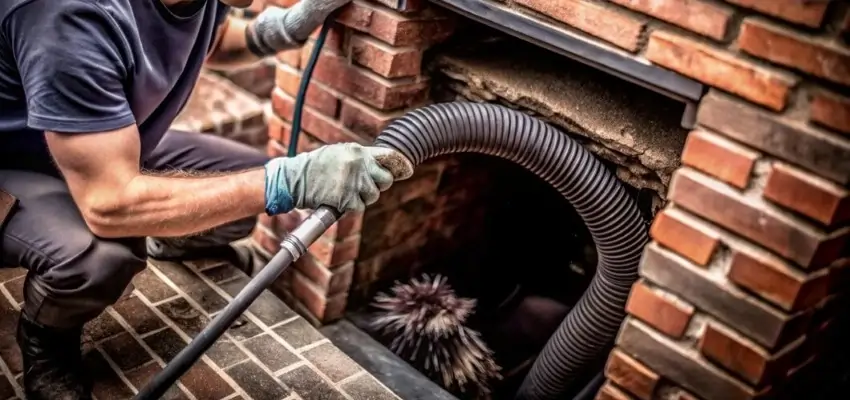
With heavy cloths, sealed openings and proper vacuums inside, and tarps and padding outside; mess control is part of the job, not an afterthought. Before we touch the chimney, we lay cloths in front of the fireplace and, when the work involves the flue, tape plastic across the opening so soot stays on our side. Our vacuums are built for fine dust, not household lint. On the roof, materials sit on tarps or boards so shingles are not scuffed. The messiest jobs break out old tiles or brick; for those, we warn you in advance and plan the clean-up accordingly.
A camera inspection shows the inside of the flue from top to bottom, which is the only way to see most flue damage. The technician feeds a small camera on a flexible rod up or down the flue and watches the image on a screen, often recording it. The footage reveals cracked or missing tiles, gaps at the joints, creosote buildup, blockages such as nests and the condition of any metal liner. Many companies share the video or still images with you. If you are comparing offers for “chimney flue services”, ask whether a camera check is included before any repair is quoted.
Anywhere from a short visit to several days, and we plan it around the size of the job, the access and the materials. A repellent on a dry, accessible chimney or a single pot swap is quick. A new liner or a prefab chimney through a finished ceiling and roof usually fills a day. A remodel that changes the height or face of a masonry chimney is measured in days, partly because new work has to cure before the next layer goes on. We also watch the forecast, since rain and frost decide when masonry and coatings can be done well.
Yes for some jobs and no for others, so we check the forecast before almost every one. Rain and frost are the big two: wet brick will not take a repellent, freezing nights spoil fresh mortar and icy shingles make roof work unsafe. Extreme heat can be a problem too, drying mortar too fast. That is why spring and fall are our busiest seasons for masonry and waterproofing. Liners and pots are more flexible and can often be fitted in cooler months on a dry day. If a weather window closes, we move the date, because a rushed job in poor conditions rarely holds up.
Tell the company what the chimney is made of, what it serves and what you want done or have noticed. Mention the type of fireplace or appliance, how many stories the house has, how steep the roof is and whether the chimney is brick, stone or a framed chase. Share any history: past repairs, a chimney fire, recent roof work or a new appliance. A few photos of the chimney from the yard and of the fireplace help a lot. These details let the company bring the right parts and give you a realistic estimate.
A good chimney quote lists the work item by item, the materials and sizes, how access will be handled, the expected timing and what happens if hidden damage is found. It should say whether clean-up, disposal, any permits needed and a follow-up visit are included. When comparing quotes, line them up side by side and check that each covers the same scope; a much lower price often means fewer items, thinner materials or a shortcut such as a coating instead of a repair. Ask each company to explain anything you do not understand before you sign.
We agree on the scope and the price before any work begins, and we check in with you if we find something that changes the plan. Request your quote for chimney flue service and see exactly what is included for your home.
Surrey homeowners: Chimney Cleaning with drop cloths down

Flue brushed end to end: Chimney Sweep around Surrey
Smoky room or stuck damper? Chimney Sweep Services for Surrey
Wood units, stoves and inserts: Fireplace Experts serving Surrey
Glass film, cobwebs, dust: Gas Fireplace Cleaning across Surrey
Gas Fireplace Maintenance: a checklist, not a quick wipe